New Security Feature: Two-Factor Authentication (2FA)
We've enhanced your account security!
You can now enable **Two-Factor Authentication (2FA) with Google Authenticator** directly from the **Security Center** in your dashboard.
✅ Add an extra layer of protection to your account.
✅ Secure your login with a one-time verification code.
✅ Easily enable or disable 2FA from your Security Center.
We're updating our services to provide a more focused and powerful experience!
**Email-related features are no longer supported by SMSMobileAPI.** These functionalities are now handled by **MailBridgeAPI**, our dedicated platform for email management, optimization, and automation.
**🚀 Why MailBridgeAPI?**
MailBridgeAPI is specifically designed to help you:
- 📥 **Manage** your email accounts more efficiently.
- ⚡ **Optimize** email workflows and productivity.
- 🤖 **Automate** email tasks and responses.
- 🔗 **Integrate** email management into your existing tools and workflows.
**What does this mean for SMSMobileAPI?**
SMSMobileAPI will continue focusing on its core features, including SMS, WhatsApp, and mobile call management.
SMSMobileAPI Is Now Officially Approved on the Pipedrive Marketplace!
You can now connect your Pipedrive account to SMSMobileAPI and manage your mobile communications directly from your CRM.
**What's available?**
- 📱 **Send SMS** directly from Pipedrive using your own mobile phone.
- 💬 **Receive SMS** and sync incoming messages with Pipedrive.
- 📞 **Incoming calls** – Automatically sync call logs.
- 📤 **Outgoing calls** – Keep track of your call history.
- 📵 **Missed calls** – Never lose track of missed calls in your CRM.
No external SMS provider required — use your own mobile phone and SIM card!
The new Workflow Studio API is now available.
Developers can securely manage and monitor their Workflow Studio automations from their own applications, services and integrations.
Available endpoints:
- GET /workflow/list/ — List all workflows associated with the authenticated account.
- POST /workflow/state/ — Activate or pause a workflow.
- POST /workflow/favorite/ — Add or remove a workflow from mobile favorites.
- GET /workflow/logs/ — Retrieve the execution history and action results for a workflow.
Each workflow is identified through its secure public workflow_uuid. Internal database identifiers are never exposed.
Authentication is available through the account API key or an Authorization: Bearer header. Every request is restricted to workflows belonging to the authenticated account.
State and favorite changes are synchronized with the SMSMobileAPI dashboard and mobile application.
Complete documentation, request examples and JSON responses are available here:
Webhook V2 — Turn Every Mobile Event Into an Instant Action
We are introducing **Webhook V2**, a major evolution of the SMSMobileAPI webhook system.
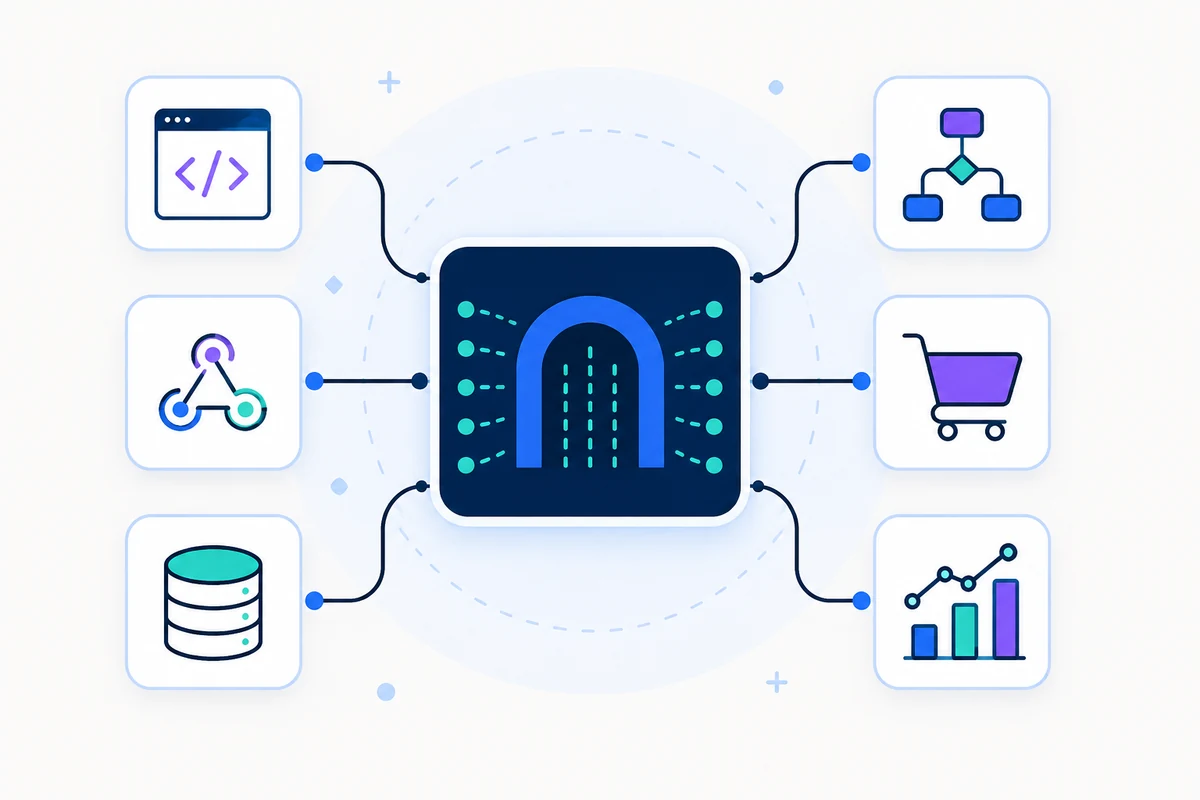
Until now, webhooks were mainly focused on incoming SMS messages. With Webhook V2, SMSMobileAPI becomes a complete **event-driven mobile communication platform**, allowing your applications to react automatically to SMS, calls, WhatsApp messages, voice transcriptions, and email activity.
Instead of repeatedly polling the API to check whether something has changed, your application can now receive structured HTTPS events automatically, as soon as supported activity occurs.
### 15 webhook event types
Webhook V2 introduces precise event names covering the main communication channels available through SMSMobileAPI.
**SMS**
* `sms.api.submitted` — An SMS sending request was submitted through the API.
* `sms.sent` — The connected mobile confirmed that the SMS was sent.
* `sms.failed` — An SMS sending operation failed.
* `sms.received` — A new incoming SMS was synchronized.
* `sms.mobile.sent` — An SMS was sent manually from the connected mobile.
**Calls**
* `call.missed` — A missed call was detected.
* `call.incoming` — An incoming call was synchronized.
* `call.outgoing` — An outgoing call was synchronized.
**WhatsApp**
* `whatsapp.submitted` — A WhatsApp sending job was created.
* `whatsapp.sent` — A WhatsApp message was successfully sent.
* `whatsapp.failed` — A WhatsApp sending operation failed.
* `whatsapp.received` — A new WhatsApp message was retrieved.
* `whatsapp.voice.transcribed` — A WhatsApp voice message was converted into text.
**Email**
* `email.sent` — An email sending request was created.
* `email.received` — A connected mailbox received a new email.
### Multiple webhook destinations
You are no longer limited to a single webhook endpoint.
Webhook V2 allows you to create **multiple independent destinations** and decide exactly which events each destination should receive.
For example, you can send:
* Incoming SMS and WhatsApp messages to your CRM.
* Missed calls to your customer support system.
* Failed SMS and WhatsApp deliveries to your monitoring platform.
* Communication events to your analytics system.
* Selected events to your own automation or AI workflow.
Each destination operates independently.
### Selective event routing
Every webhook destination can subscribe only to the events it needs.
This makes integrations cleaner and prevents your application from receiving unnecessary events.
A CRM could subscribe only to:
`sms.received`
`call.missed`
`whatsapp.received`
while an operational monitoring system could subscribe only to:
`sms.failed`
`whatsapp.failed`
### Reliable asynchronous delivery
Webhook V2 uses a **durable delivery queue**.
Events are stored before delivery and processed asynchronously, meaning your SMSMobileAPI workflow does not need to wait for a third-party server to respond.
If one destination becomes slow or unavailable, it does not block other destinations or other accounts.
### Automatic retries
Temporary endpoint failures are automatically retried using progressive delays.
Webhook V2 uses **at-least-once delivery**, so an event may occasionally be delivered more than once.
Each event therefore includes a stable event identifier that your application can store and use as an idempotency key to prevent duplicate processing.
### Signed and verifiable webhook requests
Security is an important part of Webhook V2.
Each webhook request includes information allowing your server to verify that the request genuinely originated from SMSMobileAPI.
The SMSMobileAPI Dashboard menu has been reorganized to make navigation simpler and more intuitive.
SMS and WhatsApp features are now grouped more logically, making it easier to find the tools you need and manage your messages, settings and related features from the Dashboard.
Received SMS Rules – Full Management Now Available
The new version of the SMSMobileAPI Dashboard now includes the complete menu and all available options for managing rules related to received SMS messages.
You can now create, configure and manage your incoming SMS rules directly from the updated Dashboard interface.
Bulk Manager Pro – More Options & Better Stability
Bulk Manager Pro has been updated with additional options and several improvements to overall stability.
These changes make it easier to manage large messaging campaigns while providing a smoother and more reliable experience when processing bulk SMS operations.
We have updated the WhatsApp receiving system to provide better overall stability, regardless of your geographic location.
Incoming WhatsApp messages can continue to be retrieved through both the SMSMobileAPI Dashboard and API, with improved reliability and more consistent synchronization across different regions.
You can now permanently delete all activity logs associated with your SMSMobileAPI account.
The following log categories can now be fully removed:
* SMS sent via API
* SMS sent from your mobile device
* Received SMS
* Missed calls
* Incoming calls
* Outgoing calls
* Call rule executions
* Sent WhatsApp messages
* Received WhatsApp messages
* Sent emails
* Mobile notifications
This update gives you greater control over your account data and makes it easier to manage or completely clear your activity history whenever needed.
You can now sign in to your dashboard using your email address and password.
You no longer need to enter your Account ID and Account Licence, making access faster, easier, and more convenient.
New SMS action buttons added for connected mobile devices
Two new action buttons have been added to each connected mobile device: Send to this mobile and Send from this mobile. These new options make it easier to quickly send an SMS either directly to the selected device or using the selected device as the sender.
Activity Timeline now includes SMS sent directly from the mobile
The Activity Timeline now also displays SMS messages sent directly from the connected mobile, even when they were not sent through the API. This gives you a more complete view of device activity by combining API-based SMS logs with SMS sent manually from the mobile itself.
New dashboard log for SMS sent directly from the mobile
A new menu is now available in the dashboard to view SMS sent directly from the mobile device, even when they were not sent through the SMSMobileAPI sending API. The existing log for SMS sent through the API via the mobile remains available as before. This new log is dedicated to SMS sent from the mobile itself, without using the https://api.smsmobileapi.com/sendsms/ endpoint, provided the option is enabled in the mobile app. For privacy and compliance, these messages are encrypted and anonymized.
A new visual Activity Timeline is now available in the dashboard. It transforms raw logs into a clear and modern timeline view, showing SMS received, SMS sent, missed calls, incoming calls, and outgoing calls over a selected period. Activity can be viewed per connected mobile, in a unified view, or under an unidentified mobile section when older app versions did not provide a device identifier. For the best experience and the most accurate device tracking, please use SMSMobileAPI app version 4.1.18.0 or later.
Major Dashboard Update: Call Rules for Missed, Incoming and Outgoing Calls
A major new update is now available in the SMSMobileAPI dashboard. You can now create and manage advanced automation rules for missed calls, incoming calls, and outgoing calls directly from your dashboard. Configure automatic SMS replies, custom email notifications, full call information emails, reusable templates, time slots, day-based conditions, contact targeting, duration filters, exclusions, cooldowns, and more. This update turns your connected mobile into an even more powerful communication automation system for business follow-up, team alerts, and smarter call management.
You can now access a detailed report for each SMS sent from an SMS campaign. This report includes the delivery status of each message, helping you track sent SMS more precisely and identify possible issues more easily.
In the “Connected Mobiles” management page, you can now choose which SIM card can be used for sending messages by enabling SIM 1 and/or SIM 2 via simple checkboxes (per device).
You can now choose which menu sections are visible or hidden in the dashboard. This helps make the interface lighter and better adapted to each use case, especially when not all menu sections are needed.
The sent SMS listing in the dashboard now shows the SIM port used for each message. It also displays which device was used when multiple phones are connected to the same API key. Error details have been improved for easier troubleshooting, and the log now indicates whether the SMS was sent while the app was running in the foreground or in the background.