
PROGRAMMABLE MOBILE COMMUNICATION
Connect your
software to real mobile phones.
Build SMS, call-event, notification, WhatsApp and email workflows with documented APIs and integrations. For SMS and mobile call activity, SMSMobileAPI turns the connected phone into a programmable communication endpoint.
{
  "recipients": "+32•••••••••",
  "message": "Appointment confirmed"
}
SIM + existing number · Online
FROM SOFTWARE TO THE MOBILE NETWORK
Your application becomes the brain. The connected phone becomes the endpoint.
SMSMobileAPI links business software to real communication resources without forcing the user to abandon the phone, SIM and number already used by the organization.
ONE PLATFORM, FOCUSED API REFERENCES
Integrate only the capabilities your product needs.
Each category has dedicated documentation. This keeps parameters, examples and operational requirements clear instead of hiding everything behind one generic endpoint.
Send and receive SMS
Send through connected mobiles, retrieve incoming messages and build two-way workflows.
16 operations → 02 · CALL APIUse mobile call events
Retrieve missed, incoming and outgoing call activity from connected phones.
7 operations → 03 · NOTIFICATION APIReach connected devices
Send and retrieve mobile notifications for operational workflows.
3 operations → 04 · WHATSAPP APISend and recover messages
Use the linked WhatsApp environment with the required synchronization controls.
9 operations → 05 · EMAIL APIAdd mailbox workflows
Send email, retrieve activity and respect unsubscribe status.
4 operations → 06 · DEVICESOperate multiple mobiles
Connect several phones and choose the appropriate resource for each supported action.
Explore multi-device →FIRST CONTROLLED REQUEST
Send an SMS from your backend in one HTTP call.
Keep the API key on the server, validate the recipient and message, then inspect the returned result and dashboard activity before automating live customer traffic.
- 1Connect a mobile and verify that it is online.
- 2Store the API key in protected server configuration.
- 3Send the test to a number you control.
- 4Handle the response and operational errors.
curl -X POST \
  'https://api.smsmobileapi.com/sendsms/' \
  -d 'apikey=YOUR_API_KEY' \
  -d 'recipients=+15551234567' \
-d 'message=Your appointment is confirmed.'FIT THE PLATFORM INTO YOUR STACK
Use SMSMobileAPI as a communication layer, not a separate silo.
Connect business triggers, databases, workflows and customer interfaces to one platform while keeping the delivery resources and activity visible in the dashboard.
A CRM creates a follow-up request. SMSMobileAPI routes an SMS through the selected mobile. A received reply is recovered and attached to the correct contact workflow.
Business trigger → API → real mobile → contact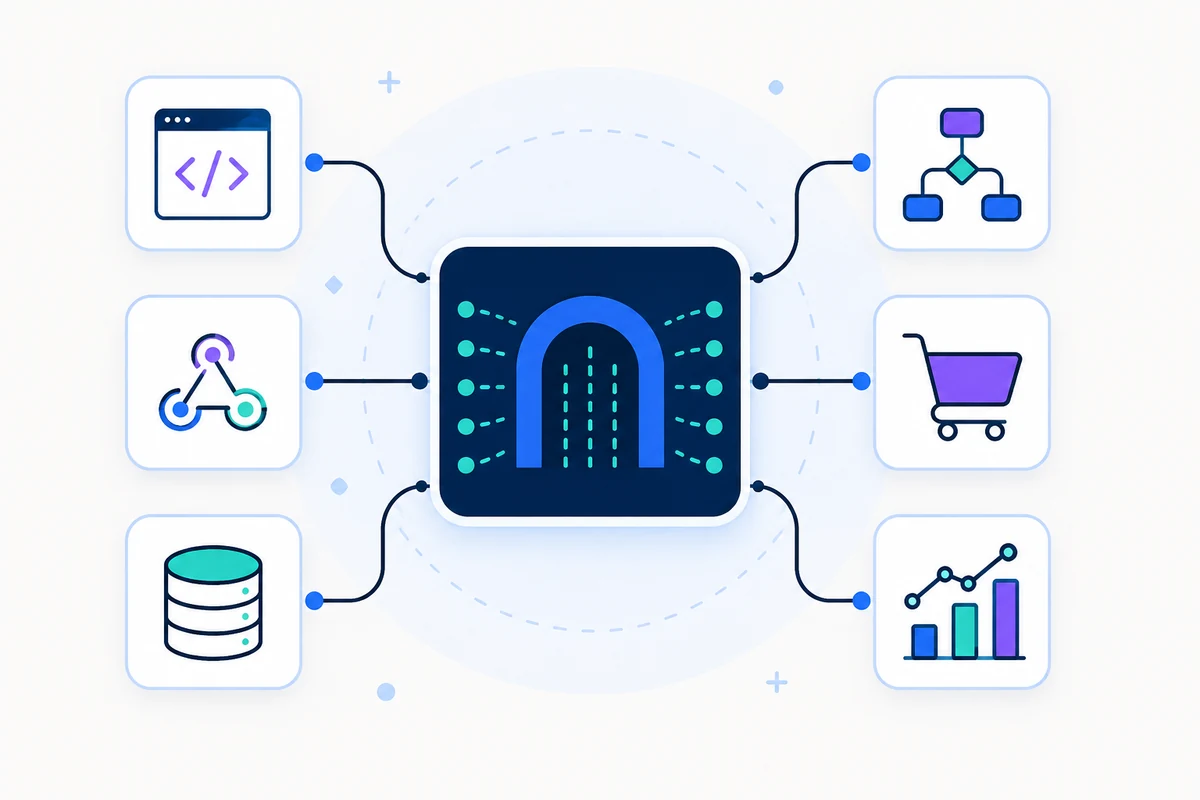
PRODUCTION CHECKLIST
Design for security and operational visibility from day one.
A successful communication integration is more than a working HTTP request. Protect credentials, validate inputs, manage failure states and make activity observable for the people operating the product.
- 01Protect API credentialsKeep keys in server-side secrets or environment configuration, never public JavaScript.
- 02Validate every requestNormalize recipients, restrict message length and reject incomplete data.
- 03Handle real failuresUse timeouts, bounded retries and explicit handling of API and device errors.
- 04Keep operations visibleStore useful request references and monitor dashboard or API activity.
- 05Test with controlled dataValidate each channel and device before enabling production automation.
- 06Respect channel requirementsFollow the specific connection, synchronization and consent rules for each capability.
WHAT YOU CAN BUILD
Communication features inside the software people already use.
CRM and ERP
Send, retrieve and attach communication activity to the correct business record.
SaaS products
Add mobile communication features without forcing every user into a separate interface.
AI assistance
Combine controlled communication actions with analysis, business knowledge and escalation rules.
Internal automation
Connect monitoring, scheduled jobs and operational tools to real communication endpoints.
INTEGRATION FAQ
Choose the right technical starting point.
Start from the developer hub, select one communication category and build a controlled end-to-end test before expanding the integration.
Do SMS really leave from a connected mobile?
Yes. With the native mobile gateway, SMS requests are routed through the connected phone, its SIM and mobile number. The phone must be online and correctly configured.
Which programming languages can use the REST API?
Any server-side environment capable of making HTTPS requests can integrate the REST endpoints. Python and PHP resources are also available for teams that prefer an SDK-oriented start.
Can one account use several connected phones?
Yes. SMSMobileAPI supports multiple connected devices. Use the documented device-selection capabilities where the chosen endpoint exposes them.
Should an API key be used in browser JavaScript?
No. Keep the API key in protected server-side configuration and let your backend authorize the business action before calling SMSMobileAPI.
Must I build everything with code?
No. Use a ready-made CRM, e-commerce, calendar or Zapier integration when it covers the workflow. Build directly on the API when the user experience or business logic must be custom.
YOUR SOFTWARE. REAL COMMUNICATION ENDPOINTS.
Build the integration your product actually needs.
Choose one capability, connect a controlled account and move from the first API request to a secure, observable production workflow.
